Buy huy-athle.be ?
We are moving the project
huy-athle.be .
Are you interested in purchasing the domain
huy-athle.be ?
domain@kv-gmbh.de · 0541-91531010
Buy huy-athle.be ?
What are the differences between covalent bonds, metallic bonds, and ionic bonds?
Covalent bonds are formed when two atoms share electrons, resulting in a strong bond between the atoms. Metallic bonds occur between metal atoms, where the electrons are delocalized and free to move throughout the structure, creating a strong bond. Ionic bonds are formed between a metal and a nonmetal, where one atom transfers electrons to the other, resulting in the formation of positively and negatively charged ions that are attracted to each other. Overall, covalent bonds involve electron sharing, metallic bonds involve electron delocalization, and ionic bonds involve electron transfer. **
Do CO bonds form with other CO bonds?
No, CO bonds do not typically form with other CO bonds. Carbon monoxide (CO) is a stable molecule with a triple bond between the carbon and oxygen atoms. This triple bond is strong and does not readily form additional bonds with other CO molecules. Instead, CO molecules tend to interact with other types of molecules through various types of chemical reactions. **


Similar search terms for Bonds
Top-Angebote
Products related to Bonds:
-
vidaXL Kit de testeur de compression pour moteur diesel 20 pcsAfin de vérifier l'état de votre moteur, vous ne pouvez pas le faire sans ce testeur de compression de 20 pièces. La jauge a une plage de 0-70 Bar / 0-1000 Psi. Le testeur de compression est livré avec 4 bougies de préchauffage différentes et 3 adaptateurs d'injecteur. Il dispose également d'un outil de réinitialisation intégré et tous les adaptateurs ont un raccourci. Un coude permet de travailler dans des angles plus difficiles.54,59 €*Shipping: 0,00 €Secure redirect to the provider
-
vidaXL Kit de testeur de compression de moteur diesel 17 pcsLe testeur de compression vous permet de mesurer facilement la pression de compression de votre véhicule diesel. Le manomètre a une plage de mesure de 0 - 70 Bar / 0 - 1000 Psi. En plus du compteur de compression, vous pouvez obtenir 9 adaptateurs de filetage de bougie de préchauffage différents et 4 adaptateurs pour filets de buse. Le manomètre à compression comprend également un dispositif de réinitialisation intégré et tous les adaptateurs ont un raccourci.62,29 €*Shipping: 0,00 €Secure redirect to the provider
-
CHI Luxury Black Seed Oil Flexible Hold Hairspray laque cheveux pour une fixation flexible 284 mlCHI Luxury Black Seed Oil Flexible Hold Hairspray, 284 ml, Laques cheveux pour femme, La laque CHI Luxury Black Seed Oil Flexible Hold Hairspray apporte la touche finale à n’importe quelle coiffure et prolonge sa tenue. Quelle que soit sa complexité, elle la renforce et la fixe durablement, tout en assurant un contrôle maximal. Vous serez ainsi sûr(e) que chacune de vos mèches restera à sa place et sera protégée contre les aléas de la météo, tels que le vent et l’humidité. Le produit : fixe parfaitement tous les types de cheveux et de coiffures sépare bien les cheveux et donne un aspect naturel à votre chevelure donne instantanément du volume à vos cheveux préserve la souplesse et ne sollicite pas vos cheveux Mode d’emploi : Agitez bien avant utilisation. Pulvérisez sur les cheveux secs à une distance de 20–30 cm. Laissez sécher à l’air libre.17,90 €*Shipping: 3,45 €Secure redirect to the provider
-
Medela Ultra-breathable Nursing Pads coussinets d’allaitement jetables ultra-respirants 30 pcsMedela Ultra-breathable Nursing Pads, 30 pcs, Coussinets d’allaitement pour femme, S’il y a quelque chose que vous apprécierez vraiment pendant l'allaitement, ce sont les coussinets de soutien-gorge Medela Ultra-breathable Nursing Pads . Ils sont d’une discrétion maximale et vraiment agréables à porter. Le produit : jetables très confortables et pratiques ne se voient pas sous les vêtements ultra-fins, à la forme adaptable fournissent une protection contre les fuites de lait Mode d’emploi : Placer les coussinets dans le soutien-gorge et les fixer avec la bande adhésive.8,17 €*Shipping: 3,45 €Secure redirect to the provider


-
Why are intermolecular bonds weaker than electron pair bonds?
Intermolecular bonds are weaker than electron pair bonds because they involve interactions between molecules rather than within a single molecule. In intermolecular bonds, the attractive forces between molecules are generally weaker than the covalent bonds that hold atoms together within a molecule. Additionally, intermolecular bonds are typically temporary and can be easily broken, whereas electron pair bonds are strong and stable. Overall, the weaker nature of intermolecular bonds allows molecules to move and interact with each other more freely. **
-
Why are intermolecular bonds typically weaker than covalent bonds?
Intermolecular bonds are typically weaker than covalent bonds because they involve interactions between molecules rather than within a single molecule. In intermolecular bonds, the attractive forces between molecules, such as van der Waals forces or hydrogen bonding, are weaker than the strong sharing of electrons in covalent bonds. Additionally, intermolecular bonds are more easily broken or disrupted by changes in temperature or pressure, leading to lower bond energies compared to covalent bonds. **
-
Why are intermolecular bonds generally weaker than covalent bonds?
Intermolecular bonds are generally weaker than covalent bonds because they involve interactions between molecules rather than within a single molecule. Covalent bonds involve the sharing of electrons between atoms, creating strong bonds within a molecule. In contrast, intermolecular bonds, such as hydrogen bonds or van der Waals forces, are weaker because they are based on temporary interactions between molecules, which can be easily broken. Additionally, intermolecular bonds are influenced by factors such as distance and orientation, further contributing to their weaker nature compared to covalent bonds. **
-
Why are primary bonds stronger than secondary bonds in chemistry?
Primary bonds, such as covalent and ionic bonds, are stronger than secondary bonds, such as hydrogen bonds and van der Waals forces, because they involve the sharing or transfer of electrons between atoms. This results in a more stable and tightly held bond. In contrast, secondary bonds are based on weaker electrostatic interactions between molecules or atoms, such as dipole-dipole interactions or temporary induced dipoles, which are not as strong as the sharing or transfer of electrons in primary bonds. Therefore, primary bonds have a higher bond energy and require more energy to break compared to secondary bonds. **

What is the difference between ionic bonds and covalent bonds?
Ionic bonds form between two atoms when one atom transfers one or more electrons to another atom. This results in the formation of positively charged ions (cations) and negatively charged ions (anions) that are attracted to each other. Covalent bonds, on the other hand, form when two atoms share one or more pairs of electrons. This sharing of electrons creates a strong bond between the atoms. In summary, ionic bonds involve the transfer of electrons, while covalent bonds involve the sharing of electrons. **
Why are Van der Waals bonds weaker than hydrogen bonds?
Van der Waals bonds are weaker than hydrogen bonds because they are formed due to temporary fluctuations in electron distribution around atoms or molecules, resulting in weak attractive forces. In contrast, hydrogen bonds are formed between a hydrogen atom and a highly electronegative atom such as oxygen, nitrogen, or fluorine, resulting in a stronger electrostatic attraction. Additionally, hydrogen bonds are directional and can form multiple bonds between molecules, while Van der Waals bonds are non-directional and typically only occur between non-polar or weakly polar molecules. **
Top-Angebote
Products related to Bonds:
-
vidaXL Kit de testeur de compression de moteur dieselNotre kit de testeur de compression diesel convivial comprend le testeur ainsi que tous les adaptateurs nécessaires pour mesurer la perte de pression sur la plupart des voitures, camions et tracteurs à diesel. Le testeur de compression est fabriqué en acier au carbone durable et comporte une jauge chromée pour obtenir des mesures précises dans des environnements difficiles. La jauge a une plage de mesure de 0-70 bar/0-1 000 PSI. Cet ensemble comprend un coupleur rapide à extrémité pivotante pour faciliter le changement et la connexion des adaptateurs. De plus, la trousse à outils est livrée dans un boîtier moulé par soufflage.62,29 €*Shipping: 0,00 €Secure redirect to the provider
-
vidaXL Kit de testeur de compression pour moteur diesel 20 pcsAfin de vérifier l'état de votre moteur, vous ne pouvez pas le faire sans ce testeur de compression de 20 pièces. La jauge a une plage de 0-70 Bar / 0-1000 Psi. Le testeur de compression est livré avec 4 bougies de préchauffage différentes et 3 adaptateurs d'injecteur. Il dispose également d'un outil de réinitialisation intégré et tous les adaptateurs ont un raccourci. Un coude permet de travailler dans des angles plus difficiles.54,59 €*Shipping: 0,00 €Secure redirect to the provider
-
vidaXL Kit de testeur de compression de moteur diesel 17 pcsLe testeur de compression vous permet de mesurer facilement la pression de compression de votre véhicule diesel. Le manomètre a une plage de mesure de 0 - 70 Bar / 0 - 1000 Psi. En plus du compteur de compression, vous pouvez obtenir 9 adaptateurs de filetage de bougie de préchauffage différents et 4 adaptateurs pour filets de buse. Le manomètre à compression comprend également un dispositif de réinitialisation intégré et tous les adaptateurs ont un raccourci.62,29 €*Shipping: 0,00 €Secure redirect to the provider
-
What are the differences between covalent bonds, metallic bonds, and ionic bonds?
Covalent bonds are formed when two atoms share electrons, resulting in a strong bond between the atoms. Metallic bonds occur between metal atoms, where the electrons are delocalized and free to move throughout the structure, creating a strong bond. Ionic bonds are formed between a metal and a nonmetal, where one atom transfers electrons to the other, resulting in the formation of positively and negatively charged ions that are attracted to each other. Overall, covalent bonds involve electron sharing, metallic bonds involve electron delocalization, and ionic bonds involve electron transfer. **
-
Do CO bonds form with other CO bonds?
No, CO bonds do not typically form with other CO bonds. Carbon monoxide (CO) is a stable molecule with a triple bond between the carbon and oxygen atoms. This triple bond is strong and does not readily form additional bonds with other CO molecules. Instead, CO molecules tend to interact with other types of molecules through various types of chemical reactions. **
-
Why are intermolecular bonds weaker than electron pair bonds?
Intermolecular bonds are weaker than electron pair bonds because they involve interactions between molecules rather than within a single molecule. In intermolecular bonds, the attractive forces between molecules are generally weaker than the covalent bonds that hold atoms together within a molecule. Additionally, intermolecular bonds are typically temporary and can be easily broken, whereas electron pair bonds are strong and stable. Overall, the weaker nature of intermolecular bonds allows molecules to move and interact with each other more freely. **
-
Why are intermolecular bonds typically weaker than covalent bonds?
Intermolecular bonds are typically weaker than covalent bonds because they involve interactions between molecules rather than within a single molecule. In intermolecular bonds, the attractive forces between molecules, such as van der Waals forces or hydrogen bonding, are weaker than the strong sharing of electrons in covalent bonds. Additionally, intermolecular bonds are more easily broken or disrupted by changes in temperature or pressure, leading to lower bond energies compared to covalent bonds. **
Similar search terms for Bonds
-
CHI Luxury Black Seed Oil Flexible Hold Hairspray laque cheveux pour une fixation flexible 284 mlCHI Luxury Black Seed Oil Flexible Hold Hairspray, 284 ml, Laques cheveux pour femme, La laque CHI Luxury Black Seed Oil Flexible Hold Hairspray apporte la touche finale à n’importe quelle coiffure et prolonge sa tenue. Quelle que soit sa complexité, elle la renforce et la fixe durablement, tout en assurant un contrôle maximal. Vous serez ainsi sûr(e) que chacune de vos mèches restera à sa place et sera protégée contre les aléas de la météo, tels que le vent et l’humidité. Le produit : fixe parfaitement tous les types de cheveux et de coiffures sépare bien les cheveux et donne un aspect naturel à votre chevelure donne instantanément du volume à vos cheveux préserve la souplesse et ne sollicite pas vos cheveux Mode d’emploi : Agitez bien avant utilisation. Pulvérisez sur les cheveux secs à une distance de 20–30 cm. Laissez sécher à l’air libre.17,90 €*Shipping: 3,45 €Secure redirect to the provider
-
Medela Ultra-breathable Nursing Pads coussinets d’allaitement jetables ultra-respirants 30 pcsMedela Ultra-breathable Nursing Pads, 30 pcs, Coussinets d’allaitement pour femme, S’il y a quelque chose que vous apprécierez vraiment pendant l'allaitement, ce sont les coussinets de soutien-gorge Medela Ultra-breathable Nursing Pads . Ils sont d’une discrétion maximale et vraiment agréables à porter. Le produit : jetables très confortables et pratiques ne se voient pas sous les vêtements ultra-fins, à la forme adaptable fournissent une protection contre les fuites de lait Mode d’emploi : Placer les coussinets dans le soutien-gorge et les fixer avec la bande adhésive.8,17 €*Shipping: 3,45 €Secure redirect to the provider
-
Medela Ultra-breathable Nursing Pads coussinets d’allaitement jetables ultra-respirants 60 pcsMedela Ultra-breathable Nursing Pads, 60 pcs, Coussinets d’allaitement pour femme, S’il y a quelque chose que vous apprécierez vraiment pendant l'allaitement, ce sont les coussinets de soutien-gorge Medela Ultra-breathable Nursing Pads . Ils sont d’une discrétion maximale et vraiment agréables à porter. Le produit : jetables très confortables et pratiques ne se voient pas sous les vêtements ultra-fins, à la forme adaptable fournissent une protection contre les fuites de lait Mode d’emploi : Placer les coussinets dans le soutien-gorge et les fixer avec la bande adhésive.15,10 €*Shipping: 3,45 €Secure redirect to the provider
-
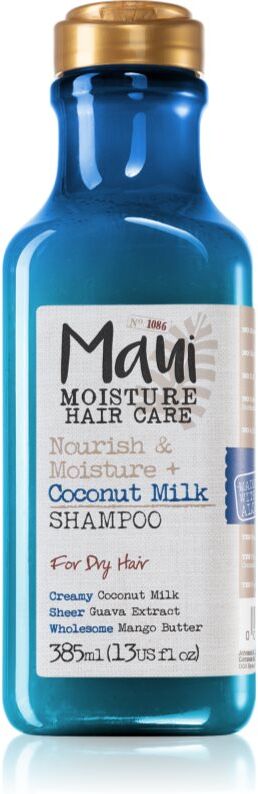
Maui Moisture Nourish & Moisture + Coconut Milk shampoing hydratant pour cheveux secs 385 mlMaui Moisture Nourish & Moisture + Coconut Milk, 385 ml, Shampoings pour femme, Pour garder des cheveux en bonne santé, brillants et pleins de vitalité, il est important d’en prendre correctement soin. Et cela commence par un lavage régulier. Le shampoing Maui Moisture Nourish & Moisture + Coconut Milk aide à éliminer efficacement toutes les impuretés des cheveux et du cuir chevelu, telles que la saleté, l’excès de sébum et les résidus de produits coiffants et des autres soins cosmétiques. Il vous procure également une sensation de propreté et de fraîcheur, prépare parfaitement les cheveux et le cuir chevelu à l’application des autres soins et renforce les effets des substances actives qu’ils contiennent. Le produit : lave les cheveux et nettoie le cuir chevelu hydrate intensément limite la casse de cheveux enveloppe les cheveux d’un agréable parfum Composition du produit : ne contient pas de silicones sans sulfates produit végétalien Mode d’emploi : Appliquez une quantité raisonnable de shampoing sur les cheveux mouillés. Faites mousser et rincez abondamment. Pour un effet optimal, utilisez les soins de cheveux d’une seule et unique gamme.8,00 €*Shipping: 3,45 €Secure redirect to the provider
-
Why are intermolecular bonds generally weaker than covalent bonds?
Intermolecular bonds are generally weaker than covalent bonds because they involve interactions between molecules rather than within a single molecule. Covalent bonds involve the sharing of electrons between atoms, creating strong bonds within a molecule. In contrast, intermolecular bonds, such as hydrogen bonds or van der Waals forces, are weaker because they are based on temporary interactions between molecules, which can be easily broken. Additionally, intermolecular bonds are influenced by factors such as distance and orientation, further contributing to their weaker nature compared to covalent bonds. **
-
Why are primary bonds stronger than secondary bonds in chemistry?
Primary bonds, such as covalent and ionic bonds, are stronger than secondary bonds, such as hydrogen bonds and van der Waals forces, because they involve the sharing or transfer of electrons between atoms. This results in a more stable and tightly held bond. In contrast, secondary bonds are based on weaker electrostatic interactions between molecules or atoms, such as dipole-dipole interactions or temporary induced dipoles, which are not as strong as the sharing or transfer of electrons in primary bonds. Therefore, primary bonds have a higher bond energy and require more energy to break compared to secondary bonds. **
-
What is the difference between ionic bonds and covalent bonds?
Ionic bonds form between two atoms when one atom transfers one or more electrons to another atom. This results in the formation of positively charged ions (cations) and negatively charged ions (anions) that are attracted to each other. Covalent bonds, on the other hand, form when two atoms share one or more pairs of electrons. This sharing of electrons creates a strong bond between the atoms. In summary, ionic bonds involve the transfer of electrons, while covalent bonds involve the sharing of electrons. **
-
Why are Van der Waals bonds weaker than hydrogen bonds?
Van der Waals bonds are weaker than hydrogen bonds because they are formed due to temporary fluctuations in electron distribution around atoms or molecules, resulting in weak attractive forces. In contrast, hydrogen bonds are formed between a hydrogen atom and a highly electronegative atom such as oxygen, nitrogen, or fluorine, resulting in a stronger electrostatic attraction. Additionally, hydrogen bonds are directional and can form multiple bonds between molecules, while Van der Waals bonds are non-directional and typically only occur between non-polar or weakly polar molecules. **
* All prices are inclusive of VAT and, if applicable, plus shipping costs. The offer information is based on the details provided by the respective shop and is updated through automated processes. Real-time updates do not occur, so deviations can occur in individual cases. ** Note: Parts of this content were created by AI.